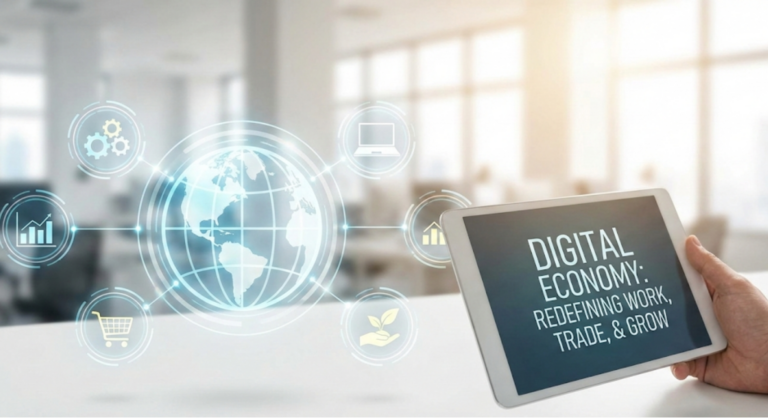

The digital economy is reshaping how value is created, exchanged, and sustained in today’s global landscape. Unlike traditional economic systems that rely on physical assets and face-to-face interactions, the digital economy operates through virtual networks, digital platforms, and intelligent technologies. As connectivity increases, economies are becoming faster, smarter, and more interconnected than ever before.
One of the defining characteristics of the digital economy is platform-based growth. Digital platforms such as online marketplaces, service aggregators, and app-based ecosystems have transformed how businesses reach customers. These platforms reduce operational costs, improve efficiency, and allow companies to scale rapidly. Startups and small enterprises can now compete with larger organizations by leveraging digital tools rather than heavy infrastructure.
Another major driver of the digital economy is cloud computing. Cloud-based solutions allow businesses to store data, run applications, and manage operations without investing in expensive hardware. This flexibility enables organizations to innovate quickly, adapt to market changes, and operate more sustainably. For individuals, cloud services support digital lifestyles by enabling seamless access to information and tools from any device.
The rise of digital entrepreneurship has further strengthened the digital economy. Content creators, online educators, app developers, and digital consultants are generating income through internet-based models. Social media, subscription platforms, and digital products have created entirely new revenue streams. This shift highlights how knowledge, creativity, and digital skills have become valuable economic assets.
Digital infrastructure plays a critical role in enabling this ecosystem. High-speed internet, secure networks, and reliable digital services form the backbone of a strong digital economy. Countries investing in 5G, smart cities, and digital public services are creating environments where innovation can thrive. These advancements improve service delivery in sectors such as healthcare, education, transportation, and governance.
The digital economy also encourages smarter consumption patterns. Digital tools help businesses track demand, reduce waste, and optimize supply chains. Consumers benefit from transparency, price comparison, and personalized experiences. This efficiency contributes to more sustainable economic practices while enhancing overall user satisfaction.
However, the rapid expansion of the digital economy demands responsible growth. Cybersecurity threats, misinformation, and unequal access to technology remain significant concerns. Ensuring digital trust requires strong policies, ethical technology use, and continuous awareness. Digital skills training and inclusive access must be prioritized to prevent sections of society from being left behind.
Looking ahead, the digital economy will continue to evolve as technologies such as artificial intelligence, blockchain, and automation mature. Success in this new era will depend on adaptability, innovation, and collaboration between businesses, governments, and individuals. Those who invest in digital capabilities today will shape the economic systems of tomorrow.
Ultimately, the digital economy represents a shift from traditional limitations to limitless possibilities—where connectivity, creativity, and data drive progress and prosperity.
About the Author